

KubeBlocks for
PostgreSQL
PostgreSQL is a powerful, open-source object-relational database known for its robustness, extensibility, and standards compliance. It excels at complex queries, JSON support, full-text search, and geospatial data — making it a top choice for modern applications.
Supported versions
Available on
 AWS
AWS Azure
Azure GCP
GCP OCI
OCI Alibaba Cloud
 Rancher
 OpenShift
Databases
 MySQL
MySQL PostgreSQLOracle
 SQL Server
 Redis
Redis MongoDB
 ClickHouse
Vector & AI
 Qdrant
 Milvus
 Elasticsearch
Message queues
 RocketMQ
 RabbitMQ
 Kafka
KafkaOthers
 VictoriaMetrics
 InfluxDB
 etcd
etcd ZooKeeper
Extend database engines like plug-ins
KubeBlocks provides unified database operations through its addon-based architecture. With KubeBlocks Enterprise, access over 15 seamless integrations to scale your database services.
One control plane, consistent operations across all engines — powered by the addon mechanism.
Run PostgreSQL with real lifecycle, availability, scaling, and data workflows
Operate PostgreSQL through lifecycle, high availability, scaling, tuning, backup, observability, accessibility, audit, and data management workflows, with each section anchored to real product evidence.
The create wizard surfaces topology, version, sizing, storage, and backup options up front so users can shape the cluster before provisioning begins.
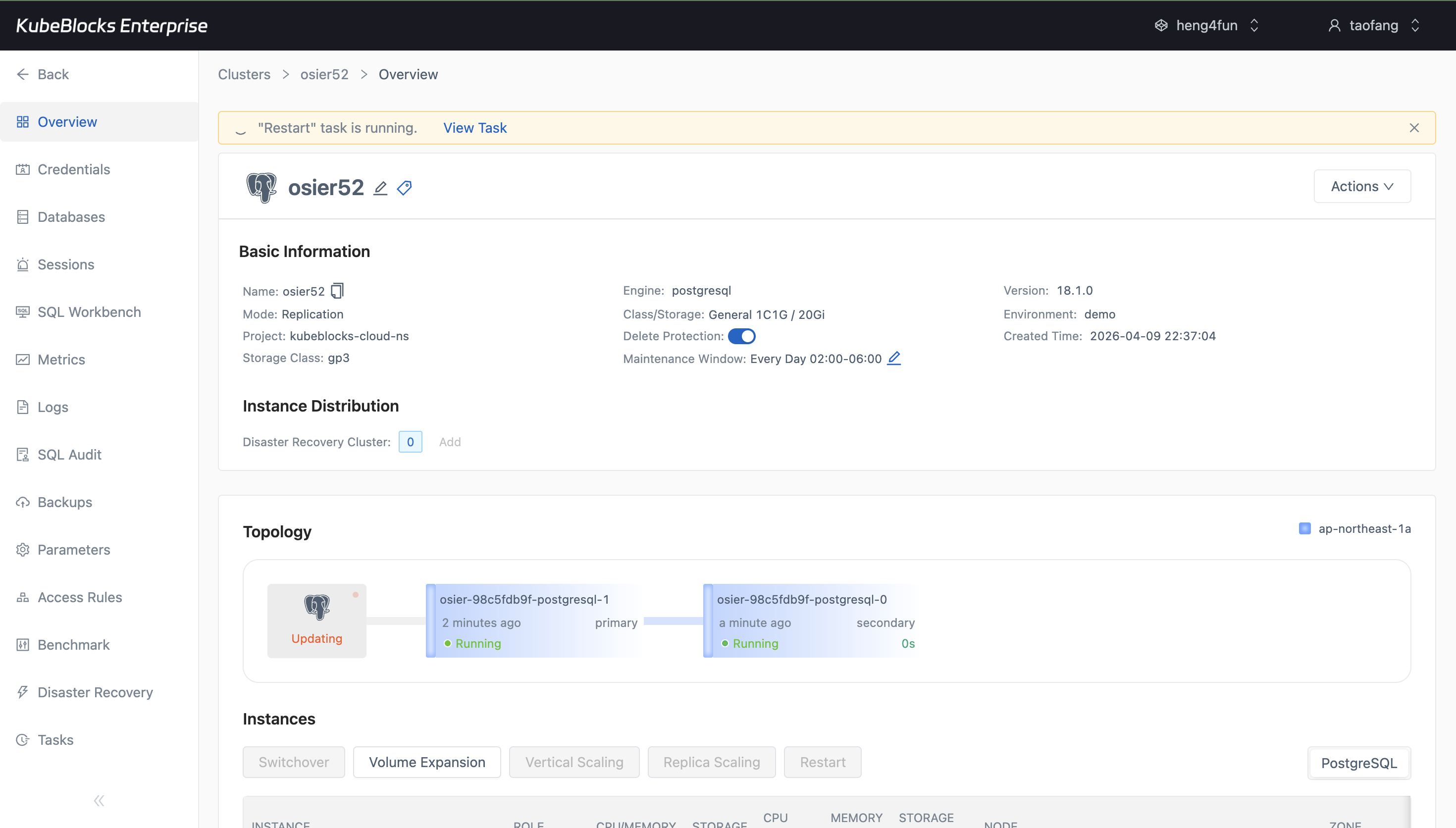
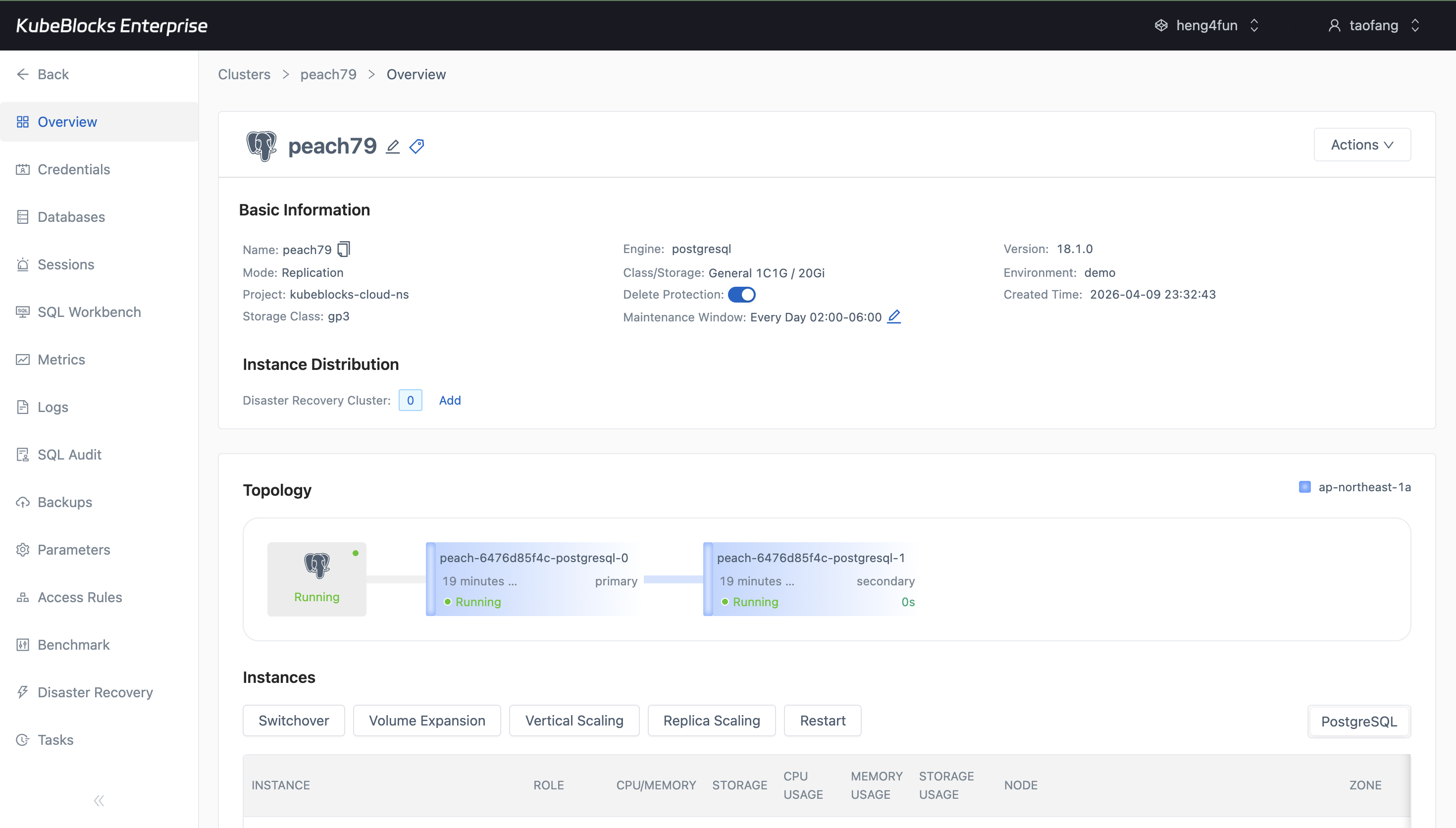
Restart stays in cluster context, making it easier to watch node progress and confirm service state without leaving the detail page.
Launch, restart, and retire PostgreSQL clusters with guided workflows
Give teams a clear path from day-0 provisioning to day-2 maintenance with creation, restart, and cleanup workflows that stay anchored in the PostgreSQL workspace.
- Use the create wizard to compare topology, engine version, CPU and memory class, storage, and backup choices before cluster creation.
- Run restart workflows from the cluster detail page and keep node progress, cluster status, and task execution visible during rolling changes.
- Handle routine cleanup from the same cluster workflow so users can retire test environments without switching tools.
Switchover keeps the current leader, target instance, and resulting topology in view so users can plan role changes with confidence.
Execute planned switchover with leader and replica roles in view
Use a topology-aware switchover flow to handle planned role changes with less guesswork and immediate validation of the new primary layout.
- Choose the target instance from a high-availability workflow that keeps current leader and replica roles visible.
- Confirm the new primary assignment immediately after the switch to reduce operational uncertainty during planned maintenance.
- Give application teams a clearer handoff by validating post-switch topology before moving on to the next change.
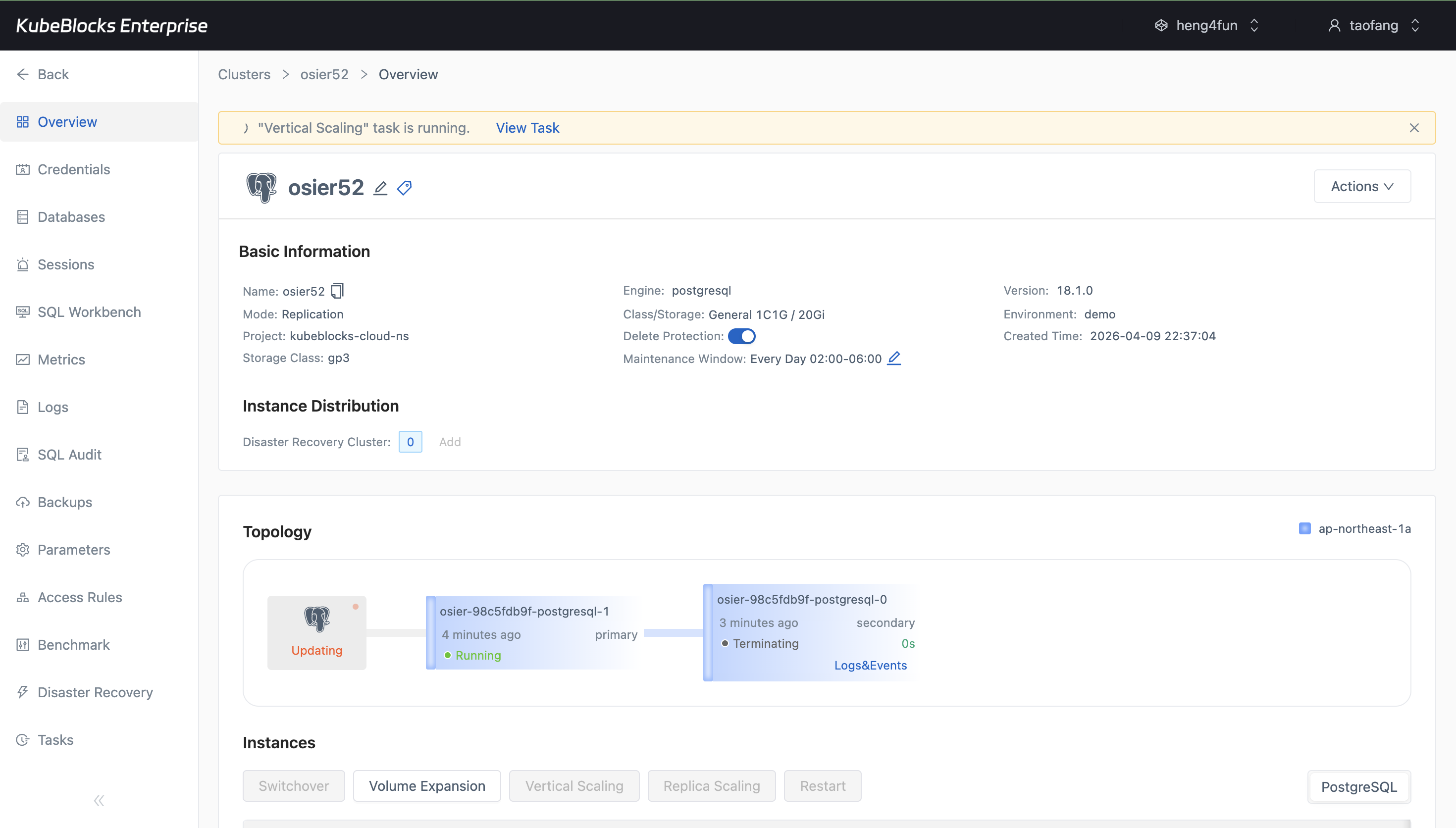
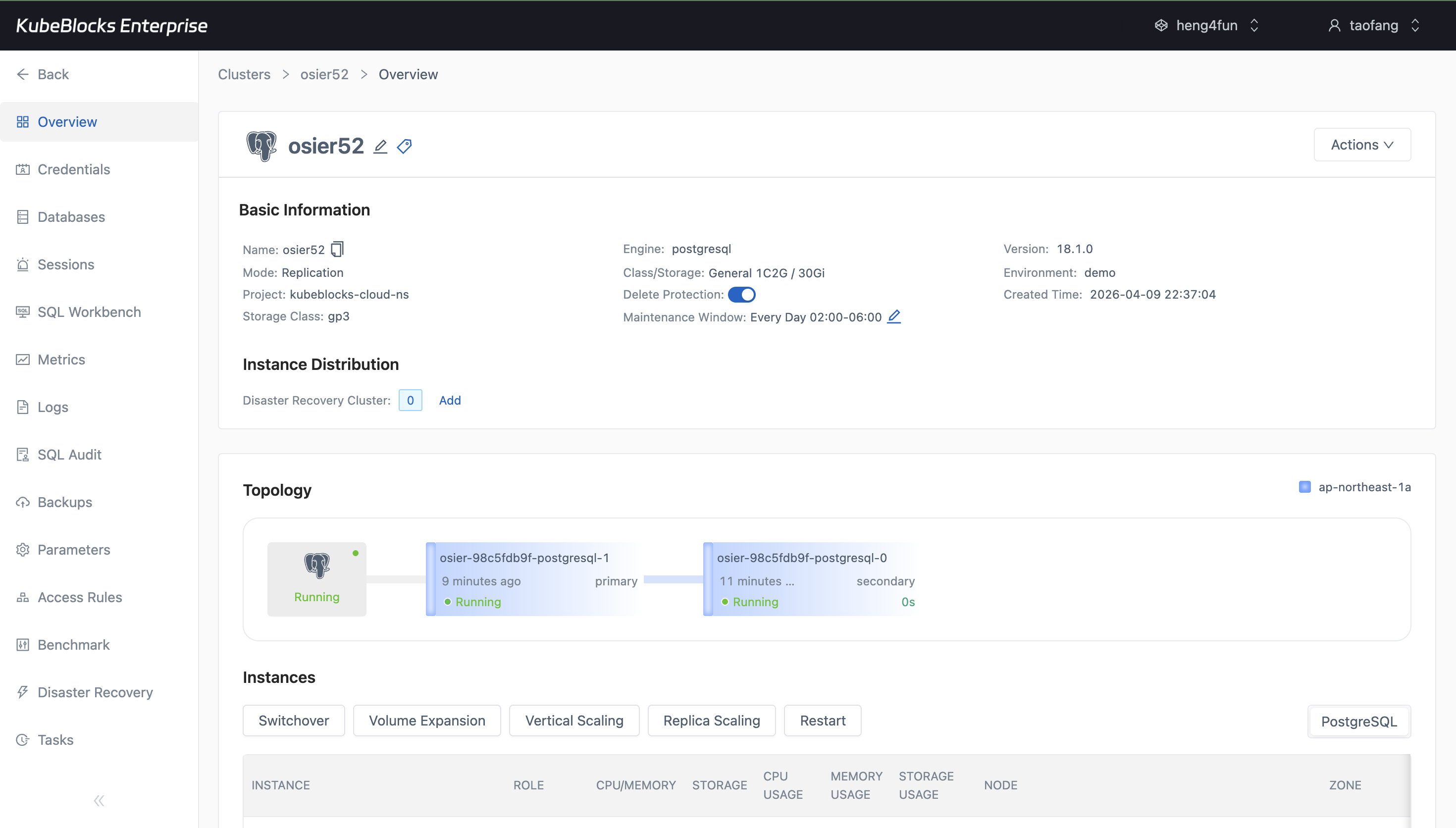
Vertical scaling exposes CPU and memory choices directly, helping users resize PostgreSQL instances with clearer resource intent.
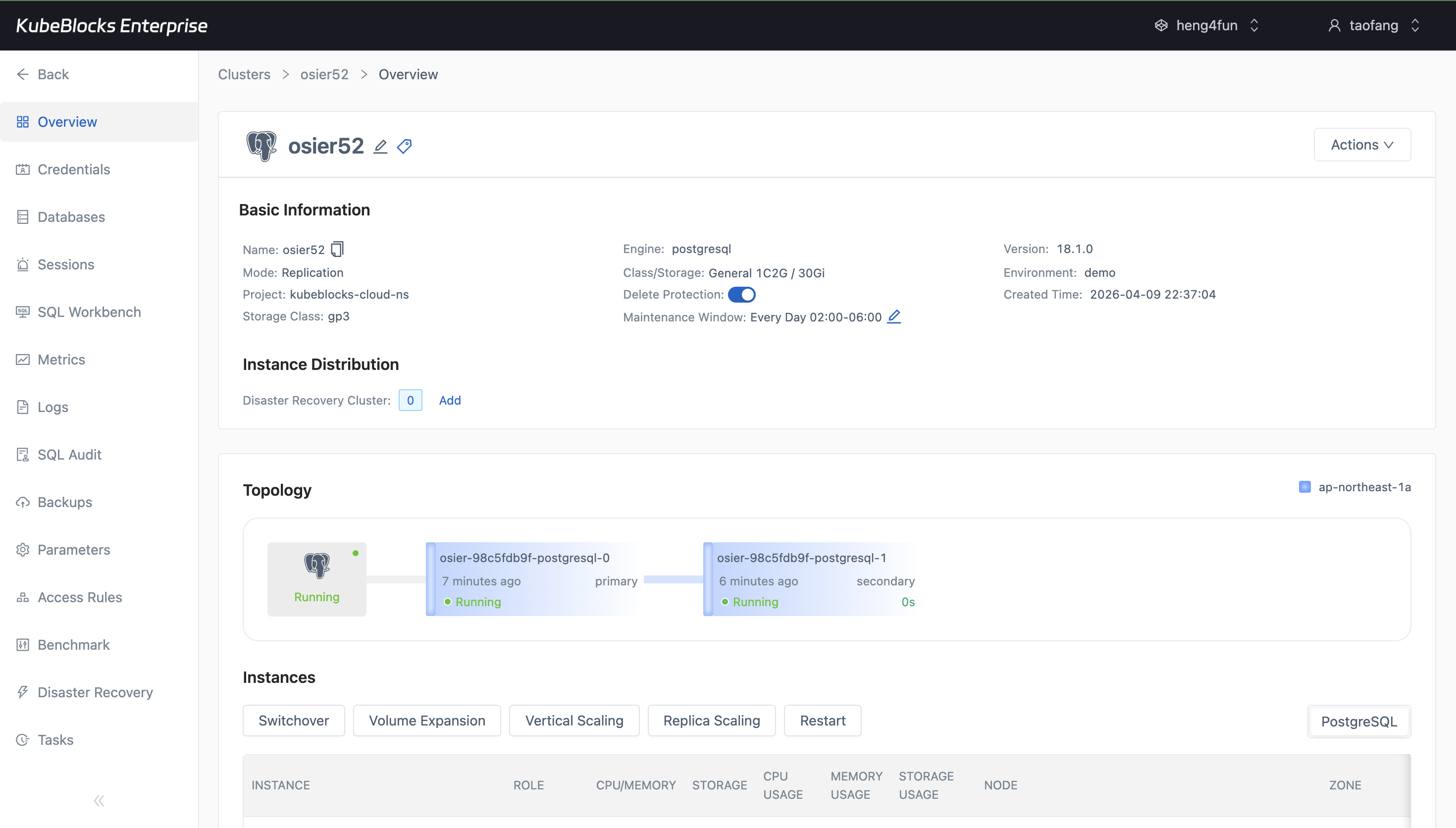
Volume expansion keeps storage growth explicit by showing current and target capacity before the change is applied.
Expand compute, replicas, and storage without losing cluster context
Scale PostgreSQL capacity with the same operational view used to run the service, keeping resource, replica, and storage changes easy to review.
- Adjust CPU and memory through vertical scaling when transaction pressure or background workloads need more headroom.
- Add or reduce replica capacity through horizontal scaling when read demand or resilience requirements change.
- Grow persistent storage online as datasets expand, without pushing users into a separate infrastructure workflow.
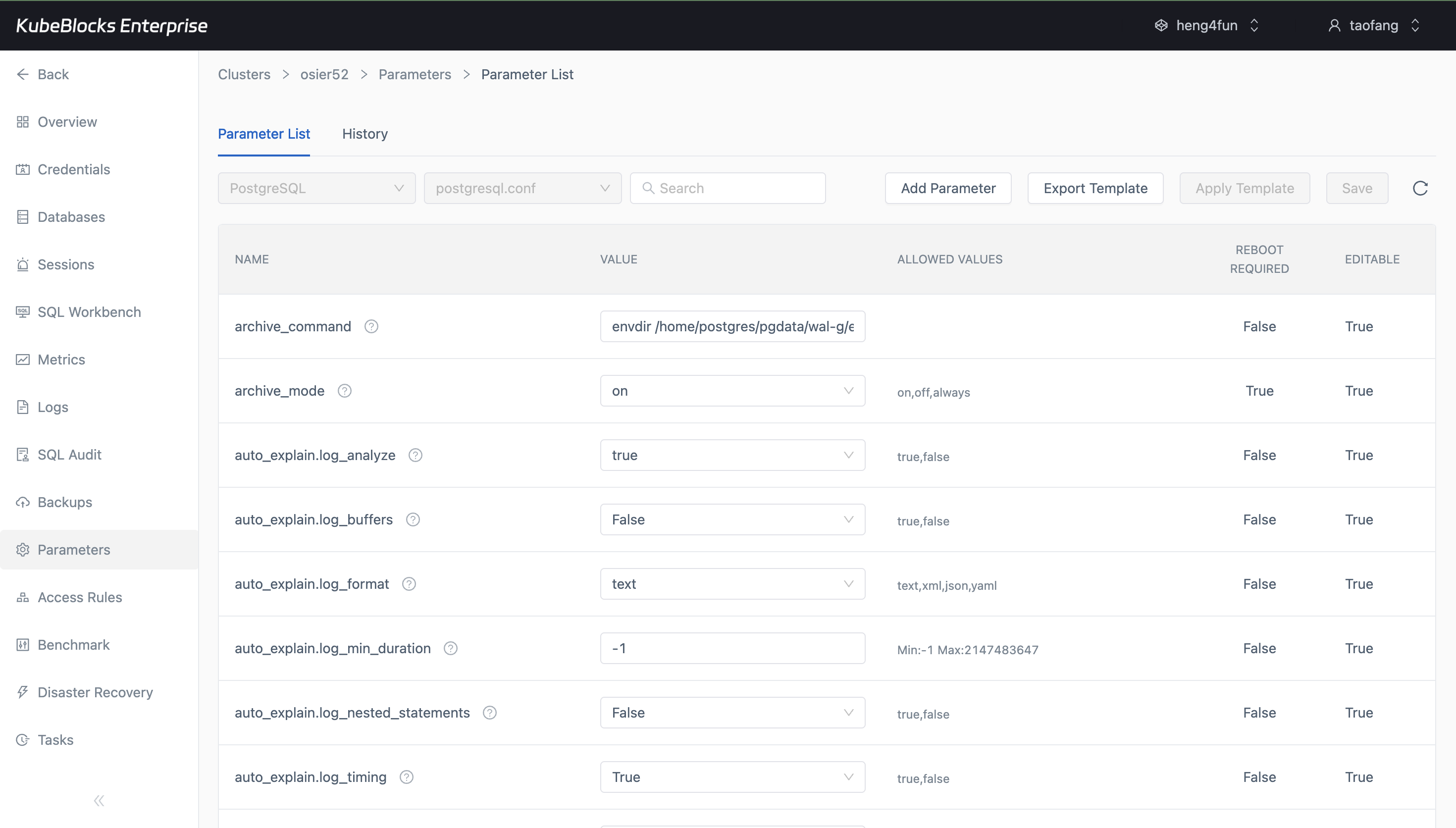
The parameter page keeps runtime settings and follow-up changes together so users can tune PostgreSQL with better context.
Tune PostgreSQL parameters from a parameter-first workflow
Review and adjust runtime settings from a dedicated parameter workflow so configuration changes stay understandable and easier to validate.
- Inspect PostgreSQL parameters from a dedicated list instead of editing raw configuration files by hand.
- Review target values in a tuning-focused workflow before a reconfiguration task is applied.
- Keep parameter tuning inside the same console experience used for lifecycle and scaling changes.
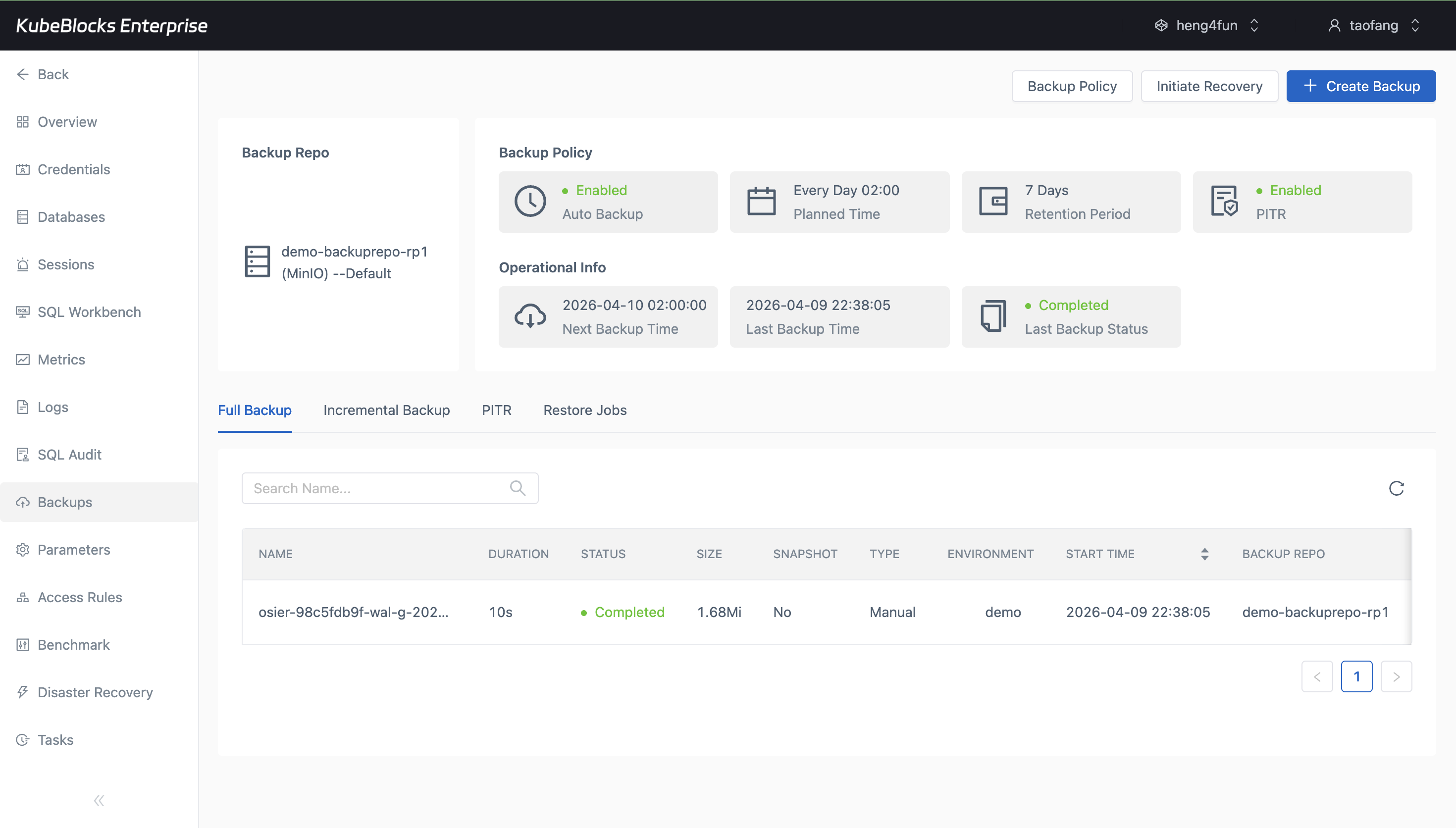
Backup views combine job history, repository information, and protection context in one PostgreSQL workspace.
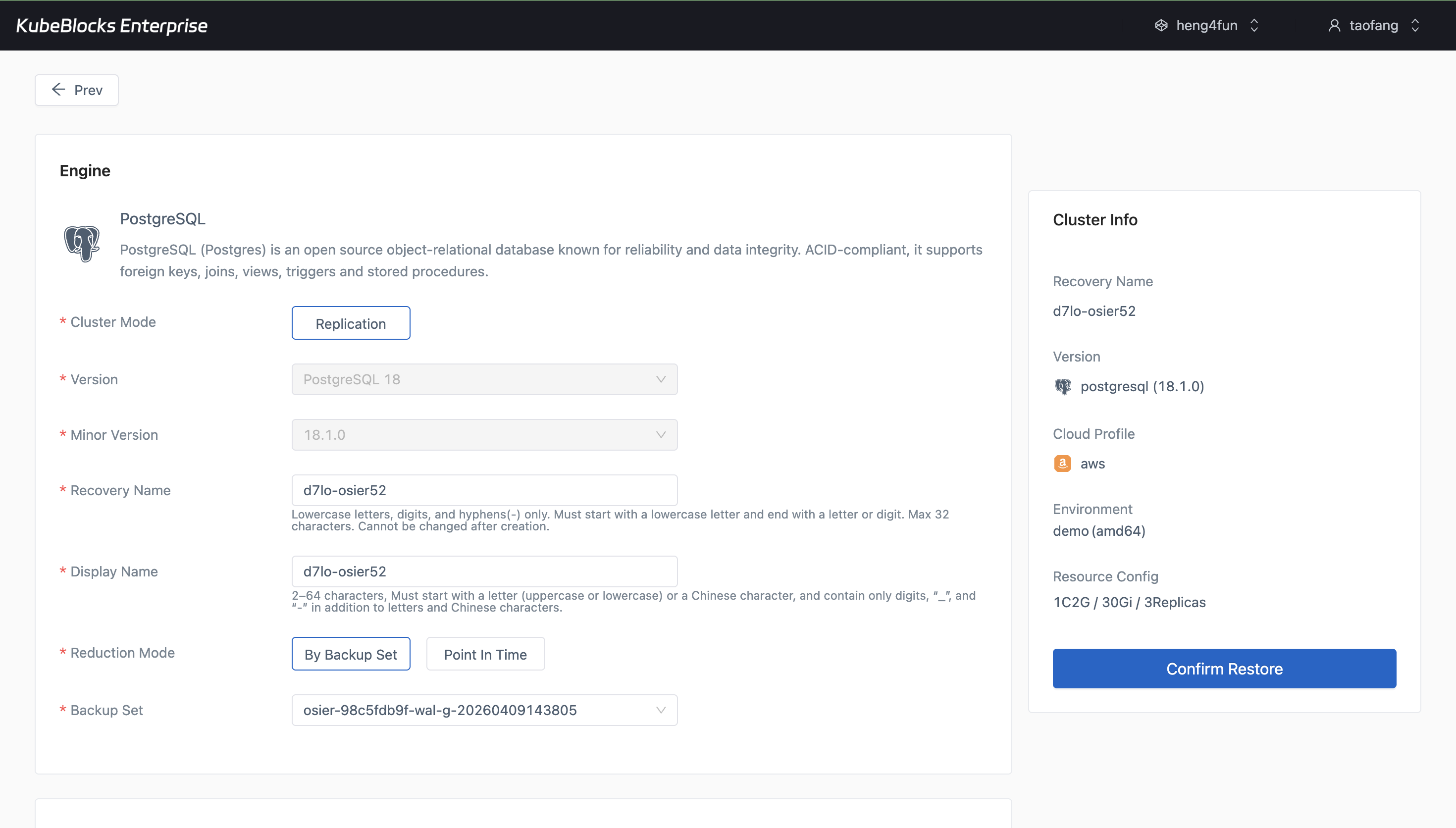
Restore guides users through backup selection and recovery targets step by step, which makes recovery planning easier to validate.
Protect production data with backup and guided restore
Keep recovery workflows close to the running service with backup visibility, repository context, and restore paths that are easier to follow.
- Review backup jobs, repositories, and policy context from the PostgreSQL backup workspace.
- Trigger or inspect backup execution without moving to a separate protection tool.
- Restore into the right target cluster through a guided recovery flow when validation or incident response is needed.
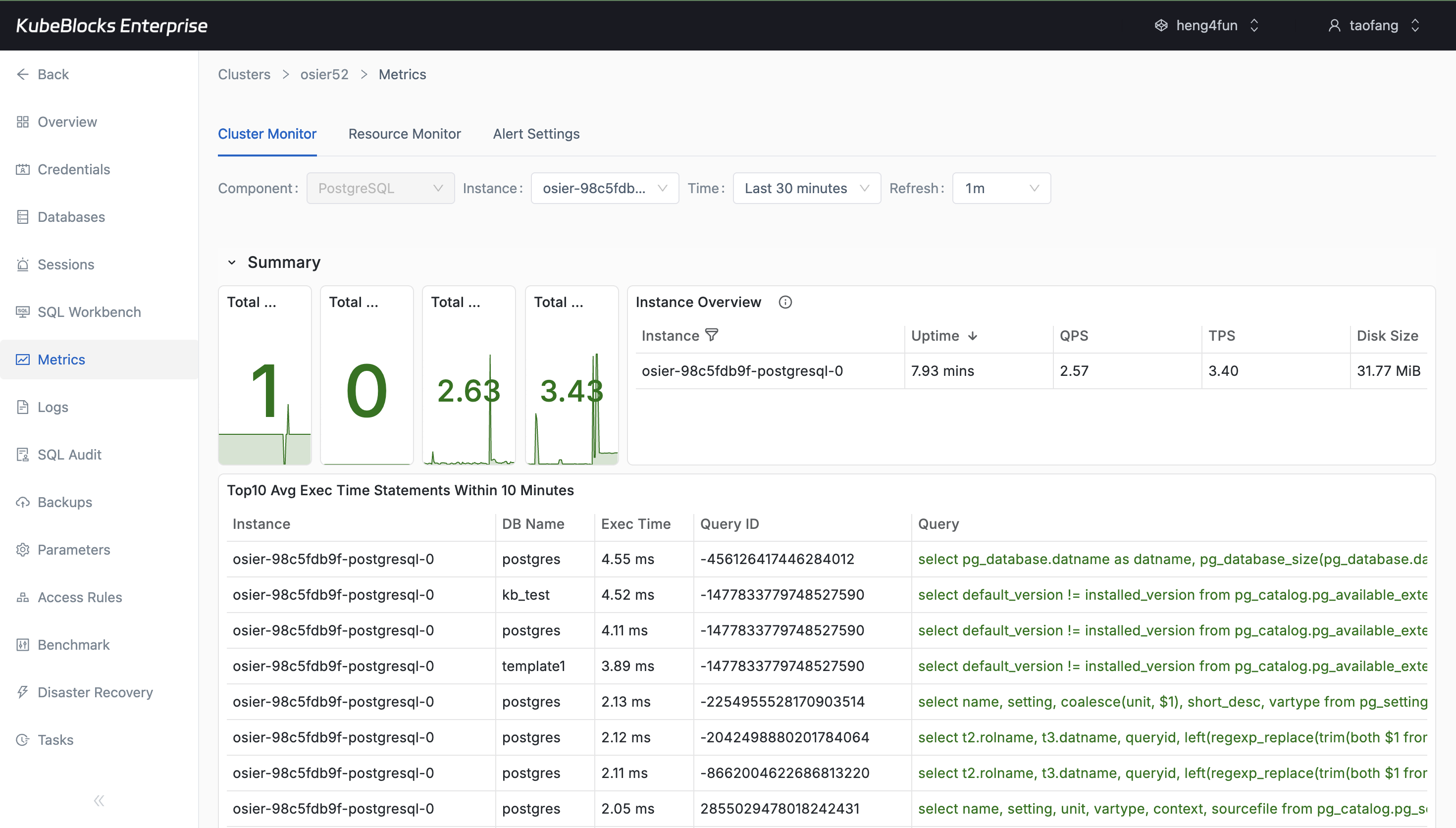
Cluster Monitor surfaces PostgreSQL health, performance, and resource signals without leaving the addon workspace.
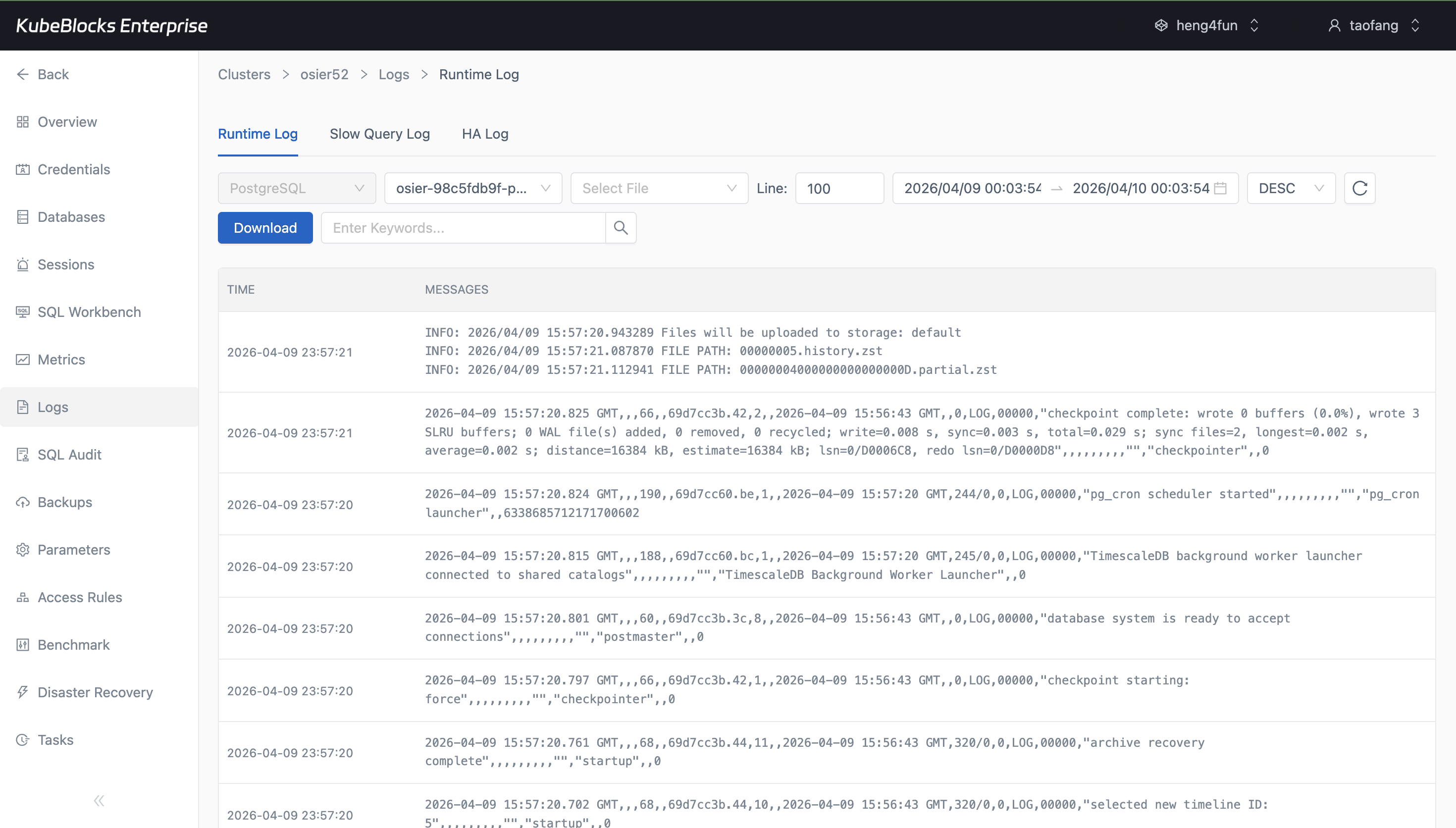
Logs remain part of the same PostgreSQL workflow, making it easier for users to move from symptoms to evidence.
Monitor performance and diagnose issues from metrics and logs
Observe PostgreSQL health and troubleshoot issues with metrics and logs that remain connected to the same cluster experience.
- Track instance health, throughput, and resource pressure from Cluster Monitor.
- Inspect Runtime Log when diagnosing performance anomalies, connection issues, or SQL behavior.
- Shorten troubleshooting loops by keeping health signals and logs close to the running cluster.
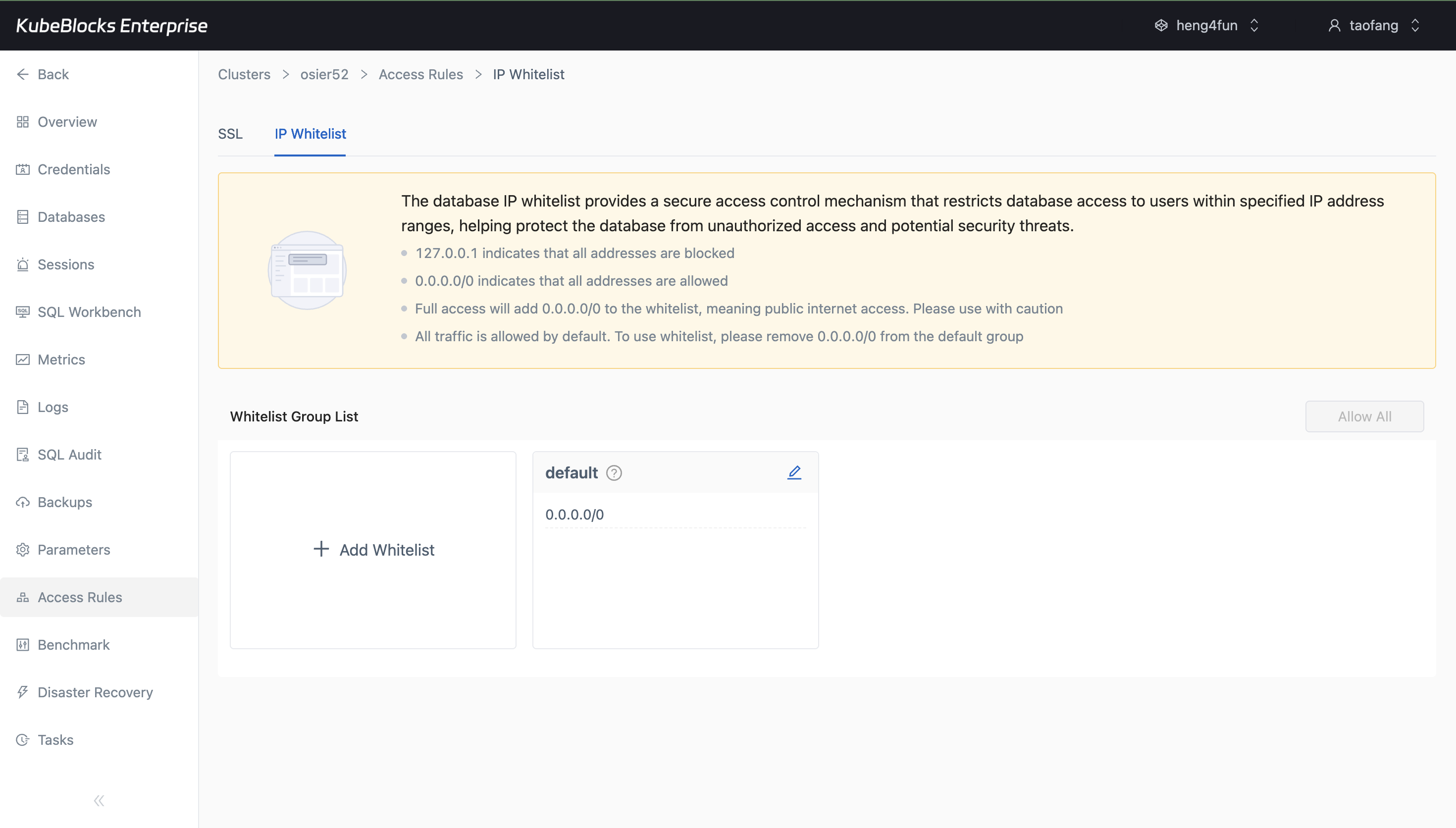
Access rules bring endpoint details and IP Whitelist controls together so users can review reachability before opening PostgreSQL to clients.
Control endpoints and IP Whitelist with explicit access rules
Manage database reachability with clearer endpoint visibility and network rules that teams can review before they open access.
- Review endpoints and access status from the PostgreSQL access rules page.
- Apply CIDR ranges via IP Whitelist from one control surface.
- Reduce accidental exposure by making connection scope explicit before client traffic is allowed.
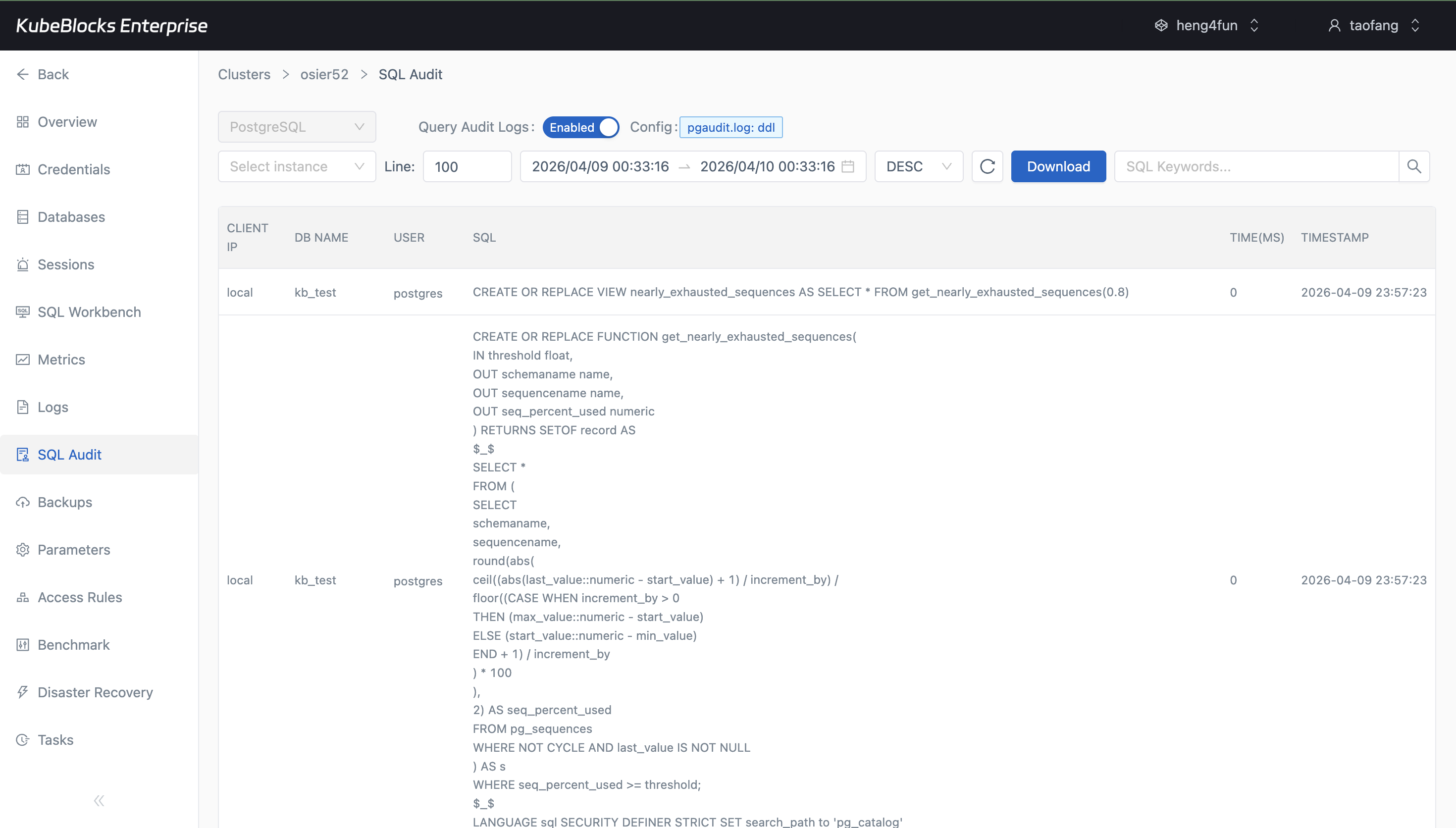
SQL Audit keeps statement history available for review when teams need stronger change visibility.
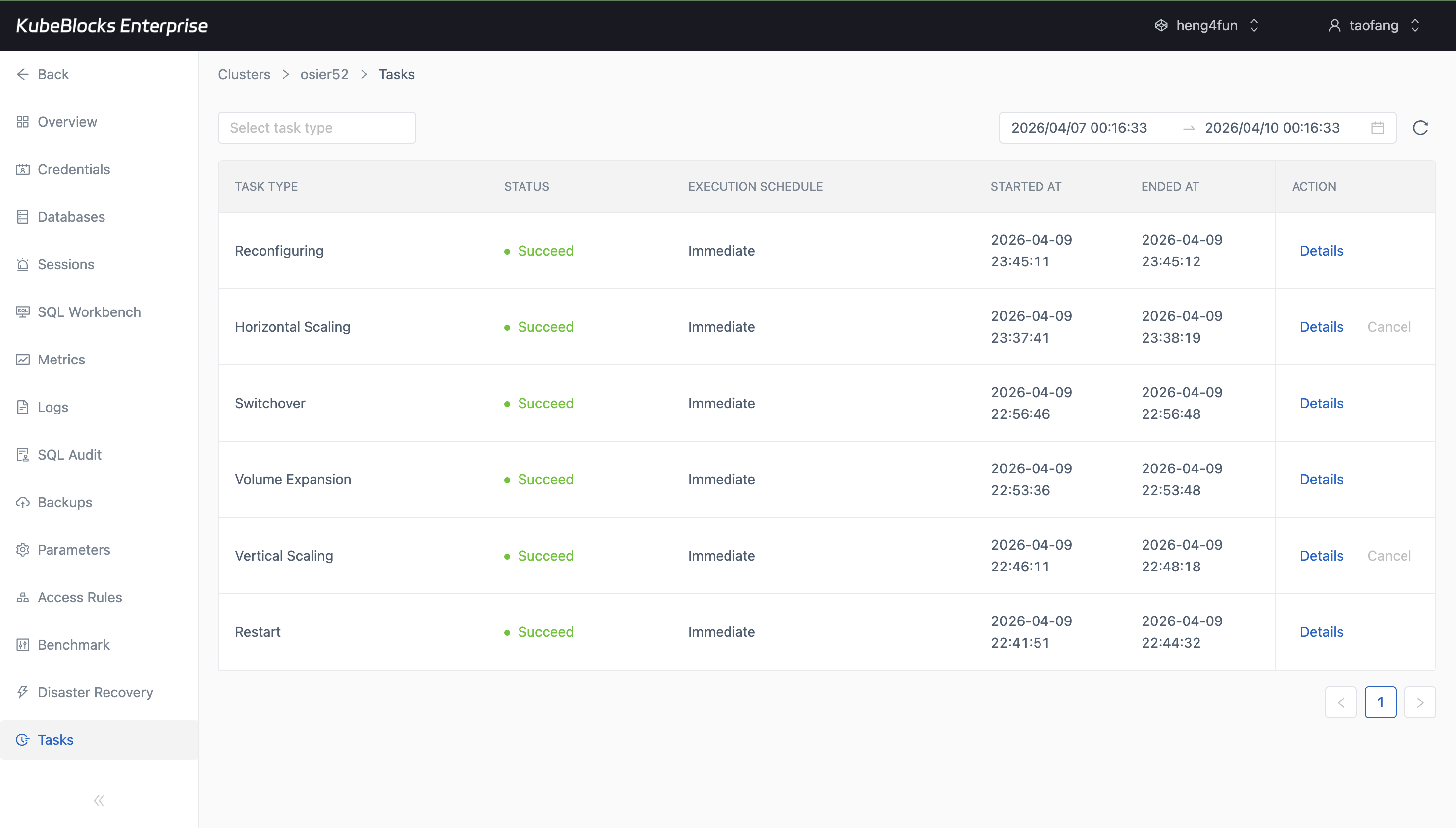
Task history captures the operational trail behind lifecycle, scaling, backup, and tuning workflows.
Review SQL activity and operational history with clear evidence
Keep statement history and task execution records close at hand so teams can answer what changed, when it changed, and how it was executed.
- Review executed statements and related metadata from SQL Audit for accountability and troubleshooting.
- Track restart, scaling, restore, and reconfiguration workflows from the PostgreSQL task history.
- Give operations and application teams a shared evidence trail for recent database changes.
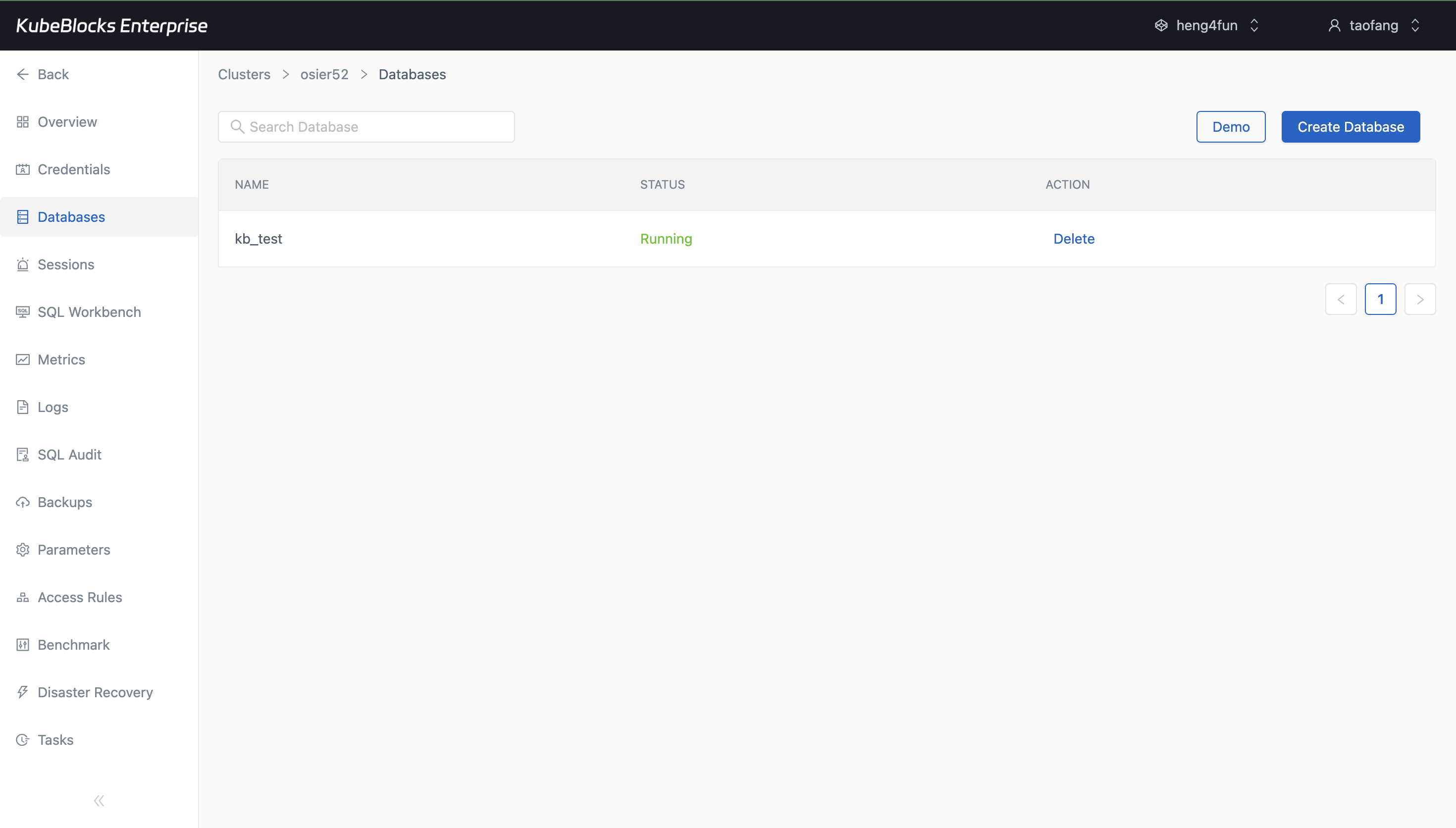
Database creation gives teams a faster path to provisioning isolated PostgreSQL workloads for new applications.
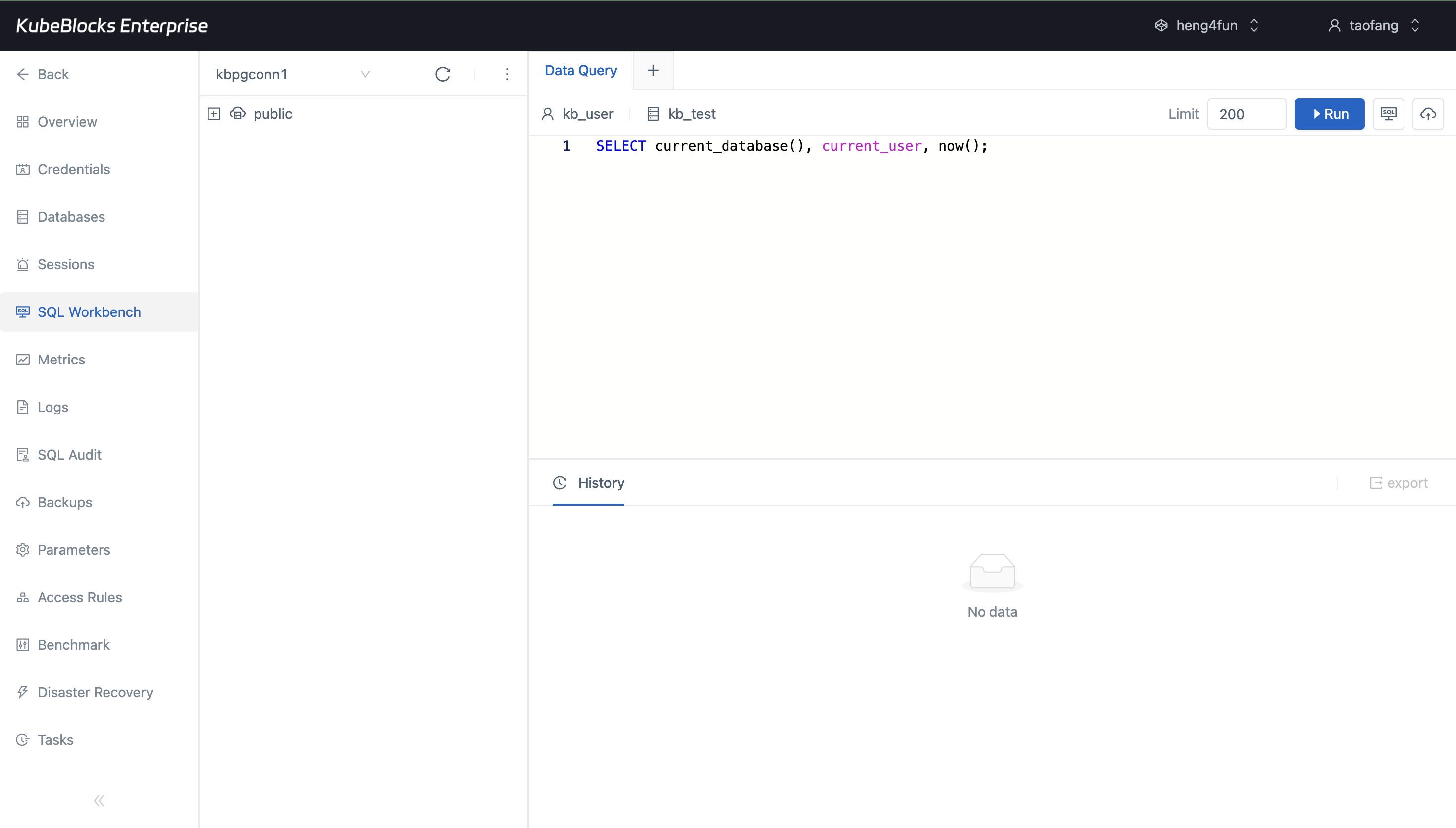
SQL Workbench lets users validate schema and query behavior directly from the PostgreSQL console flow.
Create databases, manage accounts, and validate SQL in one flow
Support application onboarding with the essentials teams need to start using PostgreSQL, from database creation to account setup and SQL verification.
- Create databases or schemas for new workloads from the PostgreSQL data management workflow.
- Create accounts with the permissions needed for application access and day-to-day administration.
- Use SQL Workbench to validate schema changes, writes, and query results from the console.
Want full Day-2 operations on Kubernetes? Supported by KubeBlocks PostgreSQL Kubernetes Operator →
Ready to build your own DBaaS on Kubernetes?
Talk to our team and see how KubeBlocks Enterprise can help you consolidate databases, strengthen security, and reduce operational costs.